
How to Tell If a Cloud IDS Is Missing Traffic
A cloud IDS is likely missing traffic when an independent source shows an eligible network flow, but the corresponding packets or session are absent from the sensor during the same time window. A quiet alert dashboard alone cannot establish that: the IDS may have received the traffic and found nothing suspicious, or it may never have received enough of the flow to inspect it.
Start with a defined path and a controlled exchange between two known endpoints. Compare evidence at the source, the traffic-copying point, the sensor interface, and the IDS inspection or session logs. Record the time, addresses, ports, protocol, direction, and expected observation point. This turns a vague coverage concern into a question that can be tested.
What evidence shows that traffic is missing?
The strongest evidence is a discrepancy between two observations that refer to the same traffic at compatible points in the path. For example, a source host records a successful connection, a network flow log records an accepted flow, and the destination records the request, yet a packet capture on the intended sensor interface shows no matching packets. That supports a delivery or placement problem. A packet capture showing the connection, followed by no matching IDS session, points further downstream toward decoding, inspection configuration, or resource pressure.
Compare equivalent observations before drawing a conclusion. Flow logs may aggregate connections, be sampled, omit payloads, or appear after a delay. Their records are not packet captures, and their presence does not prove that a complete copy reached the IDS. Conversely, a missing flow-log record does not automatically prove that no traffic crossed the network. Establish the logging scope and semantics for the specific cloud service and configuration.
Time alignment matters. Synchronize clocks where possible and allow for ingestion delay. Address translation can also make the same exchange look different at each observation point: record both original and translated addresses and ports when traffic crosses a gateway, load balancer, proxy, or network address translation boundary.
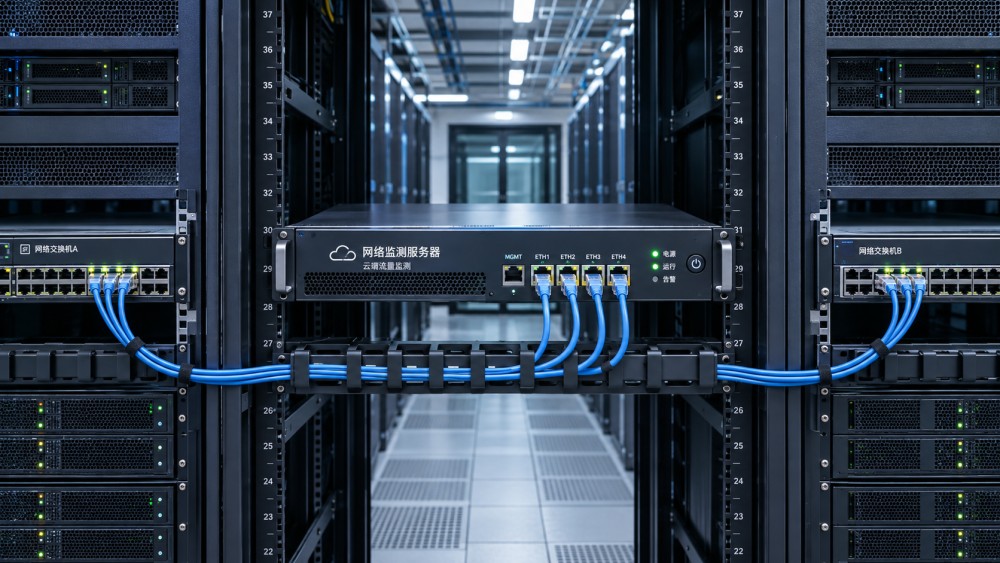
Where does the expected traffic actually travel?
Draw the path for the particular workload and direction being tested, including source and destination interfaces, routing decisions, inspection points, and any tunnel or proxy. Then mark where traffic is copied or forwarded to the sensor. A deployment diagram showing that a sensor exists is not evidence that the chosen path crosses it.
Cloud paths change with topology. Two workloads in the same network segment may exchange traffic without traversing a centralized inspection appliance. Traffic to a managed service can use a private endpoint or provider-managed path that is different from ordinary internet egress. A load balancer may terminate a connection and create a separate upstream connection, leaving the IDS with only one leg. Peered networks, transit routing, and cross-region paths add further places where expected and actual routes diverge.
Coverage also changes as workloads appear and disappear. An autoscaled instance, a newly created network interface, a container node, or a workload in another account or region may not inherit the intended mirroring configuration. Compare the current workload and interface inventory with the actual set of mirror sources, not just the original deployment list. Include short-lived workloads in the review: a snapshot taken after they disappear can conceal a recurring gap.
Can one direction be missing?
Yes. A request and its response can follow different paths or arrive through different interfaces. If only one direction reaches the IDS, the sensor may record an incomplete session, fail to reassemble application traffic, or miss detections that require both sides of the exchange. A TCP connection with many observed SYN packets but few corresponding replies is a useful lead, although filtering, failed connections, and capture placement can produce similar symptoms.
Run a known bidirectional exchange and look for packets in both directions at the sensor. If the source and destination confirm completion but only one side appears, trace routing and mirror configuration separately for each direction. Do not infer complete session visibility from a single packet or a single flow record.
Is the traffic copy reaching the sensor intact?
A configured mirror session establishes intent, not delivery. Inspect source attachment, direction settings, packet filters, destination reachability, and any service-specific limits. A filter that selects the wrong protocol, subnet, or port can exclude the test before the copy leaves the source. Overlapping mirror rules can also produce duplicates, making volume look healthy while distorting counts.
At the receiving side, distinguish the mirrored inner packet from any outer encapsulation. Confirm that the sensor or its capture pipeline decapsulates the traffic correctly and that network controls permit the delivery path. Compare interface counters and a short packet capture at the sensor with observations near the source. Where available, mirror-service delivery and drop metrics add another point of reference; their exact meaning and availability must be verified for the deployment.
Packet size is a separate failure mode. Mirroring or tunneling adds headers, and an insufficient path MTU or a configured capture-length limit can produce fragmentation, truncation, or loss. A small connectivity probe may arrive while larger application packets do not. Compare captured packet lengths with original lengths when the capture format exposes both, and test traffic representative of the application. Avoid assuming that truncation and complete packet loss are the same problem: both reduce inspection quality, but they require different corrections.
Does the IDS receive packets but fail to inspect them?
Capture a brief, authorized sample on the sensor-facing interface and compare it with the IDS session or protocol logs. If packets arrive but sessions do not, examine interface selection, capture permissions, decapsulation, protocol support, and rules that exclude the relevant traffic. Confirm that the IDS is listening on the intended interface and that traffic is associated with the correct tenant, virtual sensor, or policy where those distinctions exist.
Receiving some packets is not enough for complete inspection. Packet loss can prevent stream reassembly; a sensor that starts observing halfway through a connection may lack the handshake or earlier application context. High-throughput periods can expose capture-ring overflow, processing backlog, or dropped packets that are invisible during a quiet test. Review capture and engine drop counters alongside CPU, memory, interface throughput, and queue metrics over the same interval. Learn whether each counter is cumulative, resets on restart, or measures a particular stage before calculating a rate.
Compare like with like. Bytes reported by a network interface may include encapsulation and traffic outside the IDS policy, while IDS counters may describe decoded payloads or accepted packets only. Large differences are a reason to investigate, not a standalone loss percentage. Duplicate copies, retransmissions, and asymmetric routing also affect packet counts.
Does encrypted traffic count as covered?
A sensor can observe encrypted connections without seeing their application payload. It may still inspect network metadata and applicable protocol characteristics, but a payload-based detection cannot be expected to work against content it cannot decrypt. A connection record therefore supports a claim of network-path visibility, not full application-layer visibility.
Where authorized decryption is used, identify where encryption terminates and where the IDS observes the traffic. A sensor positioned before termination sees a different representation from one positioned on the decrypted side. Certificate handling, supported protocols, privacy requirements, and application behavior constrain what can be inspected. For traffic that remains encrypted, define coverage in terms of the metadata and detections actually available instead of treating an observed TLS session as proof of payload inspection.
How can a controlled test distinguish a blind spot from a quiet network?
Choose a representative flow with known endpoints and an agreed observation window. Generate a benign request that the application will acknowledge, then verify the exchange at both endpoints. Use a unique, non-sensitive marker in the request when the protocol and environment permit it. Search for the corresponding connection or marker at each available observation point. Protect packet captures as sensitive data and limit their scope and retention.
Test the traffic classes that matter to the coverage claim: inbound and outbound flows, workload-to-workload connections, different network segments, and paths through relevant gateways or private endpoints. Include both directions and, where relevant, representative packet sizes. A test from one virtual machine to the internet does not establish visibility for a container communicating with a database over a private path.
An authorized detection test adds a separate question: does the configured rule produce an alert when its conditions are met? First establish that the required traffic and context reached the detection engine. Then use a benign, documented test pattern or an approved security validation procedure and verify the expected rule, severity, and destination. A missing alert after confirmed packet delivery can result from disabled signatures, exclusions, rule prerequisites, unsupported protocol decoding, or alert suppression. It does not by itself prove missing traffic.
What coverage measurement is meaningful?
Define coverage against an inventory and a path, not against the number of alerts. One useful measure is the proportion of in-scope workload interfaces with an active, verified traffic-copying configuration. State the inventory source, the time of measurement, exclusions, and whether verification means configuration review or an observed test. That measure says nothing by itself about packet loss or encrypted payload visibility.
A second measure can track tested paths: the number of planned source-destination-direction combinations for which the expected exchange was observed at the sensor, divided by the number tested. Report untested paths separately. A passed test establishes evidence for the tested conditions and window, not permanent coverage of every flow on that path.
For each confirmed gap, record the affected workloads and directions, the last known successful observation, the evidence source, and the point at which visibility stopped. After a routing, policy, scaling, or sensor change, repeat the relevant test and retain the result with the configuration state. A resolved alert-volume anomaly is not sufficient evidence that the original traffic path is now observable.
Common Questions
Can an IDS be healthy while its coverage is incomplete?
Yes. A running process and successful health checks show that a component is available; they do not establish that every intended workload is mirrored or that both directions of each relevant path reach it. Health monitoring and coverage validation answer different questions.
Should flow logs and IDS packet counts match exactly?
No. They can describe different scopes, aggregation intervals, directions, and protocol details. Use them to identify discrepancies for investigation, after accounting for sampling, translation, duplicates, and timing. Exact packet-level comparison requires observations designed for that purpose.
Want to dive deeper into these market dynamics, or need data-driven support for your next business move? Drop a line below and let the analysts at CyberTrade provide customized insights.
Related News
 Identity AccessIs Cloud-Hosted RADIUS a Good Fit for Multicloud Enterprises?Posted on Nov 18, 2026Is a cloud-hosted RADIUS server a good fit for a multicloud enterprise? Explore integration, security, resilience, and costs before you decide.
 Identity AccessHow to Test RADIUS Failover Across Cloud RegionsPosted on Nov 18, 2026How do we test RADIUS failover across cloud regions? Follow a practical guide to verify recovery, secure access, audit logs, and failback.
 Identity AccessHow to Choose a Certificate Authority for Multicloud WorkloadsPosted on Nov 18, 2026How do we choose a certificate authority for workloads across multiple clouds? Explore key criteria, compare CA options, and plan a production-ready pilot.
 Multi-CloudHow to Verify CASB Visibility Across Multiple CloudsPosted on Nov 18, 2026How can we verify a CASB's visibility across multiple clouds? Learn to test coverage, trace events, uncover blind spots, and build a reliable assessment.
 Cloud SecurityHow to Test WAF Attack Blocking Without Disrupting Legitimate TrafficPosted on Nov 18, 2026How do we test whether a WAF blocks attacks without disrupting legitimate traffic? Explore safe simulations, false-positive checks, and staged enforcement.
 Identity AccessCan Smart Cards Work With Cloud Apps Without Replacing Your IdP?Posted on Nov 18, 2026Can smart cards work with cloud applications without replacing our identity system? Discover the integration requirements, security benefits, and pilot checks.
 Prices & CostsHow to Compare Cloud HSM Total Costs Across ProvidersPosted on Nov 18, 2026How do we compare the total cost of cloud HSMs across providers? Discover the hidden charges, key assumptions, and practical steps for a fair comparison.
 Multi-CloudHow to Verify Consistent API Gateway Authentication Across CloudsPosted on Nov 18, 2026Verify API gateway authentication across clouds with practical tests for tokens, routes, bypass risks, and policy enforcement. Explore the guide.
 Cloud SecurityDo You Need a Next-Generation Firewall in Every Cloud?Posted on Nov 18, 2026Do we need a next-generation firewall in every cloud environment? Explore traffic risks, cloud-native controls, costs and deployment options.
 Threat ResponseHow to Tell If a Cloud IDS Is Missing TrafficPosted on Nov 18, 2026How can we tell whether an IDS is missing traffic in a cloud environment? Compare flow evidence, test sensor visibility, and uncover hidden coverage gaps.
 Identity AccessHow to check if a certificate authority is trustedPosted on Nov 18, 2026Certificate Authorities aren't trusted equally everywhere. Learn how to check certificate chains, trust stores, and revocation before choosing a CA.
 Cloud SecurityCan cloud access security brokers detect shadow IT?Posted on Nov 18, 2026Cloud Access Security Brokers can uncover shadow IT—but visibility has limits. Discover how CASBs detect cloud apps, expose blind spots, and guide a practical response.











