
Data Diode Pricing: Hardware, Integration and Ongoing Costs
Data diode pricing involves more than the cost of a hardware appliance. A procurement team may also need to budget for application integration, installation, testing, support contracts, software updates, and staff training. The final investment depends on the data being transferred, the operational environment, supplier terms, and the evidence required to accept the system. A lower equipment quote can become the more expensive option if it leaves critical work outside the contract.
The most useful question is not simply “What does a data diode cost?” It is “What will it cost to establish and maintain a verified one-way data flow for our applications?” This guide breaks that question into purchasing decisions, cost categories, and acceptance criteria.
What are you actually buying?
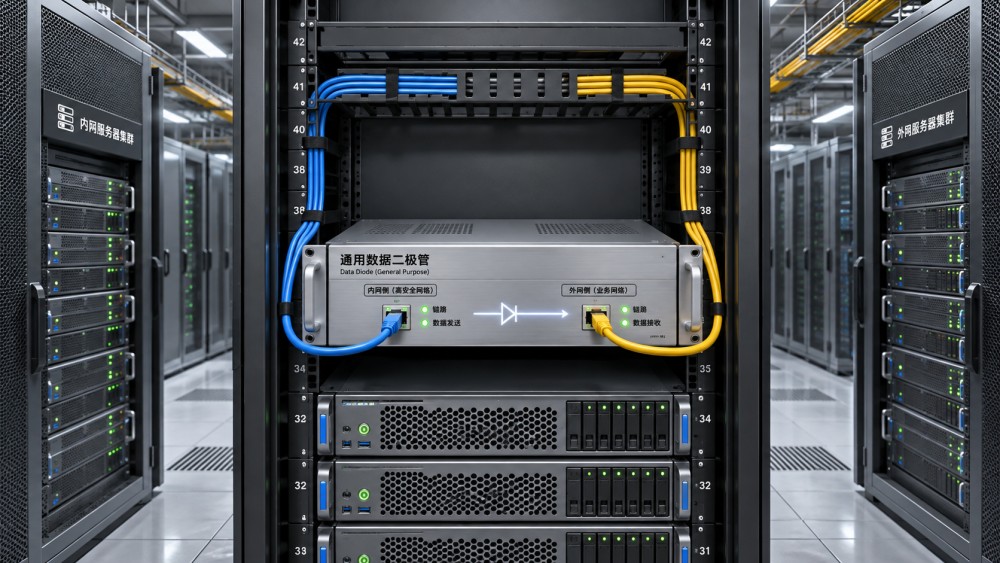
A data diode is designed to permit data to travel in one direction across a security boundary while preventing a return path through the diode itself. It is commonly considered where information needs to move out of a sensitive network without allowing conventional two-way connectivity back in. The direction and architecture must be defined for the particular environment; a diode is not a general substitute for every firewall, gateway, or security control.
The appliance is only one part of the purchase. Many business applications expect acknowledgments, retries, or other two-way protocol behavior. A practical deployment may therefore include software or intermediary systems on each side of the boundary to collect data, prepare it for transfer, and deliver it to the destination. Those components can account for substantial integration and operational work.
For a meaningful comparison, ask suppliers to price the complete data-transfer service: the hardware, supporting software, interfaces, deployment work, testing, and maintenance needed for the stated use case.
Why data diode pricing varies
There is no reliable universal price for a data diode deployment. Quotes depend on scope, commercial terms, geography, and operational requirements. Without a defined architecture and supplier quotations, an apparent market average would be a weak basis for a budget. The following factors are more useful for building an estimate.
Hardware capacity and configuration
Throughput requirements influence the appliance specification, but buyers should look beyond a headline speed. Clarify whether the stated figure reflects raw link capacity or usable application throughput, and ask how it was measured. Data format, protocol conversion, encryption outside the diode, and destination processing can all affect the rate achieved in a deployment.
Other hardware considerations include network interfaces, environmental requirements, rack space, power arrangements, and whether the design needs redundant units. A spare appliance for recovery is not necessarily the same as an active high-availability configuration. Each has different costs and operational implications.
Supported applications and connectors
A supplier may offer connectors for common data sources and destinations, but “supported” can mean different things. One quote may include a ready-to-configure connector; another may include only the underlying platform and charge separately for the connector, implementation, or license.
List the exact systems, versions, protocols, data formats, and expected changes. A transfer from an industrial historian to an enterprise analytics environment has different dependencies from moving files between two isolated networks. Legacy applications, proprietary formats, and unsupported versions can introduce custom development or vendor coordination.
Availability and site constraints
In critical infrastructure or other operational environments, deployment may have to fit into planned maintenance windows. Site access, safety procedures, travel, staging equipment, and coordination with operations staff can increase cost even when the technical configuration is straightforward.
Ask whether the supplier’s estimate assumes remote access, normal business hours, a single location, and an available test environment. If those assumptions do not match the site, the quote may understate the real deployment effort.
Build a cost model around the full deployment
Separate one-time and recurring charges, but also identify costs that occur only when the environment changes. The table below can be used to structure a request for quotation and expose differences between proposals.
For internal comparison, calculate total cost of ownership over the same planning period for every bid:
Estimated ownership cost = initial hardware and software + implementation and acceptance + recurring support and licenses + internal operating effort + expected changes and eventual replacement or exit.
Document assumptions rather than presenting the result as a guaranteed final cost. Include currency, applicable taxes, travel, payment milestones, and any exchange-rate assumptions. Internal labor belongs in the model even if it does not appear on the supplier’s invoice.
Integration costs: where an attractive quote can change
Integration deserves its own review because it connects the security boundary to the systems people rely on every day. A data source may need an agent or export process. Data may need transformation, buffering, or validation before it crosses the boundary. On the receiving side, another component may have to reconstruct the data and make it usable by an application.
These steps raise practical questions: What happens if the destination is unavailable? How much data can be buffered, and for how long? Can operators detect a failed or delayed transfer without introducing an unintended reverse communication path? The answers depend on the design, not just the appliance specification.
Request a written scope of work that names each interface and assigns responsibility for credentials, certificates where applicable, host provisioning, network changes, configuration, and testing. For custom work, specify who owns the deliverables, whether source code or documentation is provided, and how future application upgrades will be handled.
If a fixed-price proposal excludes discovery or assumes clean, well-documented interfaces, consider a paid assessment or pilot before committing to a full rollout. A pilot is useful only if its scope is explicit: identify the representative data flow, the test environment, success criteria, and what work can be reused in production.
Ongoing costs that procurement should not leave to operations
After deployment, the organization still needs to monitor transfer health, respond to failures, manage software versions, and maintain supporting systems. Those activities may sit with security, network engineering, operational technology, an integrator, or a managed-service provider. If responsibility is unclear at purchase time, it tends to become a problem when the first transfer fails.
Review support terms alongside the architecture. Does the contract cover the diode hardware, transfer software, connectors, and integration work, or only selected components? Check support hours, response and restoration commitments, escalation routes, replacement-part arrangements, and the treatment of obsolete software versions. A response-time commitment is not automatically a repair-time commitment.
Training should cover more than initial installation. Budget for routine checks, alert interpretation, recovery procedures, and knowledge transfer when staff change. Also establish how supplier updates will be assessed and installed within the site’s maintenance and change-control process.
How to compare data diode proposals fairly
Give every bidder the same baseline. Describe the source and destination networks, permitted direction of flow, data types, expected volume and peak rates, availability needs, site constraints, and required evidence. Distinguish mandatory requirements from options so that a lower-priced bid is not rewarded for leaving out necessary functionality.
Then normalize the proposals. If one supplier includes installation and another treats it as an option, add the omitted work to the second bid before comparing totals. Do the same for connectors, support duration, travel, training, spares, and internal effort. Record unknowns rather than assuming they are free.
- Check the boundary: What exactly enforces the one-way path, and which associated components remain outside that boundary?
- Check the scope: Are all named applications and versions included, or only a subset?
- Check the commercial terms: What triggers additional license, connector, support, or change charges?
- Check the dependencies: Which operating systems, third-party products, network services, or specialist skills are required?
- Check the evidence: What can the supplier demonstrate for the proposed configuration, rather than for a different product or test setup?
Supplier claims about evaluations or certifications should be checked against the relevant documentation, including the evaluated product version, configuration, scope, and validity. An assessment of one component does not by itself prove that the complete deployment meets an organization’s security or compliance requirements.
Define acceptance before the purchase order
Acceptance criteria turn a proposal into a measurable commitment. Agree on them while there is still time to change the scope and price, not after equipment arrives. Tests should reflect the intended production architecture and clearly state their boundaries.
For example, a contract might require a witnessed test showing that specified files reach the destination intact, that transfer delay remains within an agreed limit under a defined workload, and that operators receive an alert when a designated component fails. The same plan should describe how the one-way property will be verified, what evidence will be provided, and which parties are responsible for the test environment.
Also specify the remedy for failed acceptance: defect classification, correction period, retesting, and any effect on payment. Security testing and evidence review should involve the organization’s qualified technical and operational teams; a functional data-transfer test alone is not proof that every surrounding control is sound.
Questions to settle before committing
Before selecting a supplier, confirm whether the proposal covers the first use case only or the expected life of the deployment. Adding a second site, a new connector, or a higher data rate later may require different licenses, hardware, or professional services. Ask for the pricing mechanism and contractual process for those changes, even if exact future requirements are not yet known.
Finally, identify what a workable exit looks like. The organization may need configuration documentation, access to transfer formats, assistance with migration, and a plan for securely decommissioning equipment. These details rarely decide a purchase on their own, but they make the ownership cost—and the dependency on a supplier—visible.
The strongest procurement decision is not necessarily the lowest initial quote. It is the proposal that defines the required one-way data flow, assigns the work needed to deliver it, and provides credible evidence that the agreed service can be operated and maintained within the organization’s constraints.
- Last One:No more articles
- Next Article:Cloud RADIUS Servers: Fixing Common Wi-Fi Authentication Failures2026-11-18
Want to dive deeper into these market dynamics, or need data-driven support for your next business move? Drop a line below and let the analysts at CyberTrade provide customized insights.
Related News
 Identity AccessIs Cloud-Hosted RADIUS a Good Fit for Multicloud Enterprises?Posted on Nov 18, 2026Is a cloud-hosted RADIUS server a good fit for a multicloud enterprise? Explore integration, security, resilience, and costs before you decide.
 Identity AccessHow to Test RADIUS Failover Across Cloud RegionsPosted on Nov 18, 2026How do we test RADIUS failover across cloud regions? Follow a practical guide to verify recovery, secure access, audit logs, and failback.
 Identity AccessHow to Choose a Certificate Authority for Multicloud WorkloadsPosted on Nov 18, 2026How do we choose a certificate authority for workloads across multiple clouds? Explore key criteria, compare CA options, and plan a production-ready pilot.
 Multi-CloudHow to Verify CASB Visibility Across Multiple CloudsPosted on Nov 18, 2026How can we verify a CASB's visibility across multiple clouds? Learn to test coverage, trace events, uncover blind spots, and build a reliable assessment.
 Cloud SecurityHow to Test WAF Attack Blocking Without Disrupting Legitimate TrafficPosted on Nov 18, 2026How do we test whether a WAF blocks attacks without disrupting legitimate traffic? Explore safe simulations, false-positive checks, and staged enforcement.
 Identity AccessCan Smart Cards Work With Cloud Apps Without Replacing Your IdP?Posted on Nov 18, 2026Can smart cards work with cloud applications without replacing our identity system? Discover the integration requirements, security benefits, and pilot checks.
 Prices & CostsHow to Compare Cloud HSM Total Costs Across ProvidersPosted on Nov 18, 2026How do we compare the total cost of cloud HSMs across providers? Discover the hidden charges, key assumptions, and practical steps for a fair comparison.
 Multi-CloudHow to Verify Consistent API Gateway Authentication Across CloudsPosted on Nov 18, 2026Verify API gateway authentication across clouds with practical tests for tokens, routes, bypass risks, and policy enforcement. Explore the guide.
 Cloud SecurityDo You Need a Next-Generation Firewall in Every Cloud?Posted on Nov 18, 2026Do we need a next-generation firewall in every cloud environment? Explore traffic risks, cloud-native controls, costs and deployment options.
 Threat ResponseHow to Tell If a Cloud IDS Is Missing TrafficPosted on Nov 18, 2026How can we tell whether an IDS is missing traffic in a cloud environment? Compare flow evidence, test sensor visibility, and uncover hidden coverage gaps.
 Identity AccessHow to check if a certificate authority is trustedPosted on Nov 18, 2026Certificate Authorities aren't trusted equally everywhere. Learn how to check certificate chains, trust stores, and revocation before choosing a CA.
 Cloud SecurityCan cloud access security brokers detect shadow IT?Posted on Nov 18, 2026Cloud Access Security Brokers can uncover shadow IT—but visibility has limits. Discover how CASBs detect cloud apps, expose blind spots, and guide a practical response.











